
How Does Marketing Strategy Actually Shape Innovation?

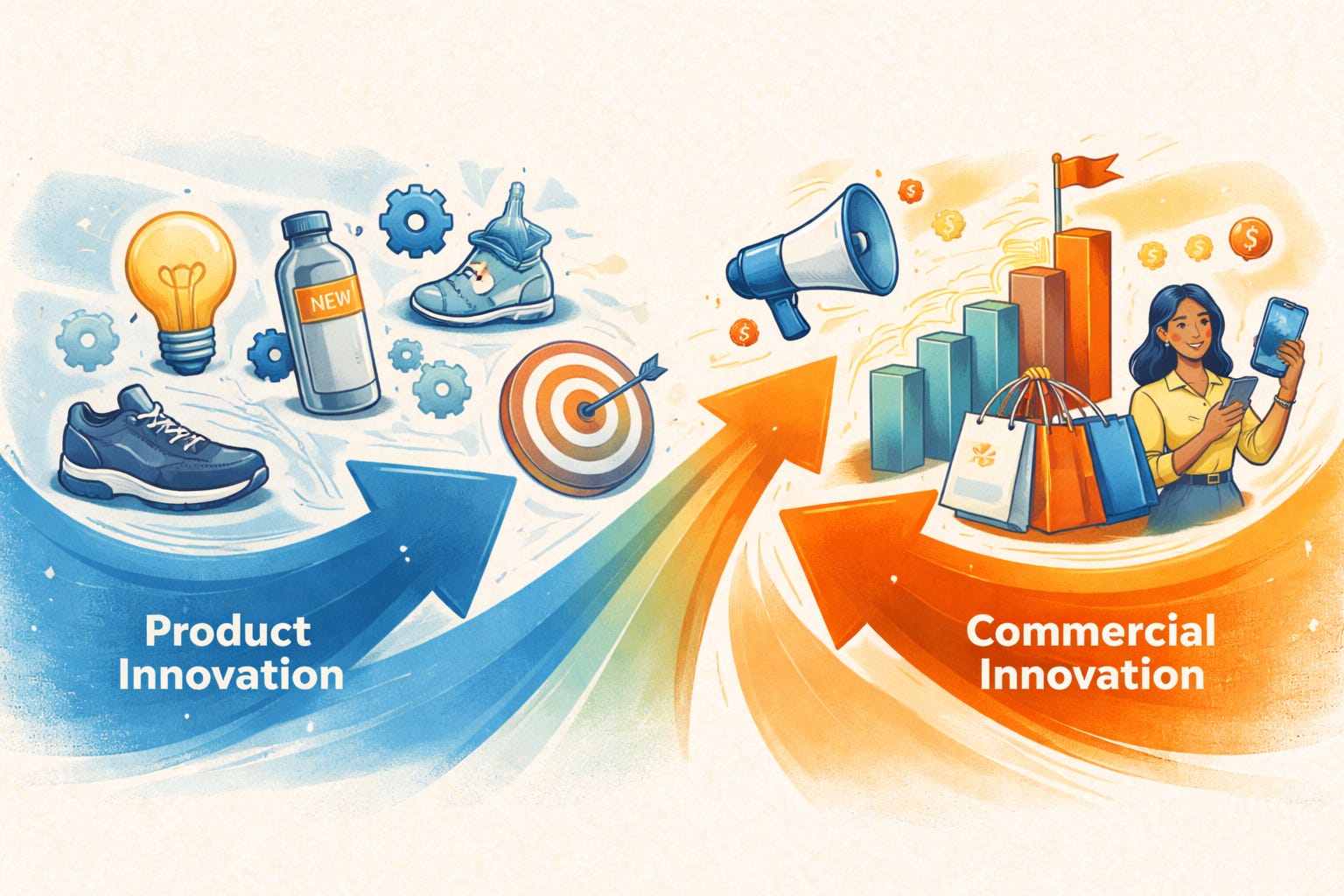
On my last day at CES, I can’t help but notice how so many innovation conversations still gravitate toward one familiar pole: product. Better features. Better performance. Better design.
All essential. All costly.
Yet history suggests that product innovation alone rarely produces enduring market leadership. The brands that do tend to pair it with a second, equally important discipline—one that is often under-articulated but deeply consequential: commercial innovation.
I first learned to think about this distinction from some very smart clients at P&G. Brand partners like Mark Christenson, Anna Kirsch, Jeronimo Escudero and Patricia Dimichele taught me that inventing something new and making it win in market are related but fundamentally different challenges.
Product Innovation: Value Creation
Product innovation advances the core offer itself. It solves unmet needs, improves experiences, and creates the raw material for differentiation. It is where real value is created.
But it’s also expensive and slow. Development cycles are long, risk is high, and even successful innovations can struggle if consumers don’t quickly understand or trust them.
This is where many organizations fall into a quiet trap: assuming that a better product will naturally find its audience.
It rarely does.
Commercial Innovation: Value Realization
This is where commercial innovation enters the picture.
Commercial innovation focuses on how value is realized in the market—not by changing the product, but by innovating how it is:
Introduced and framed
Branded and named
Priced, packaged, and bundled
Distributed and promoted
Repeated and scaled
In short, commercial innovation turns product truth into market momentum.
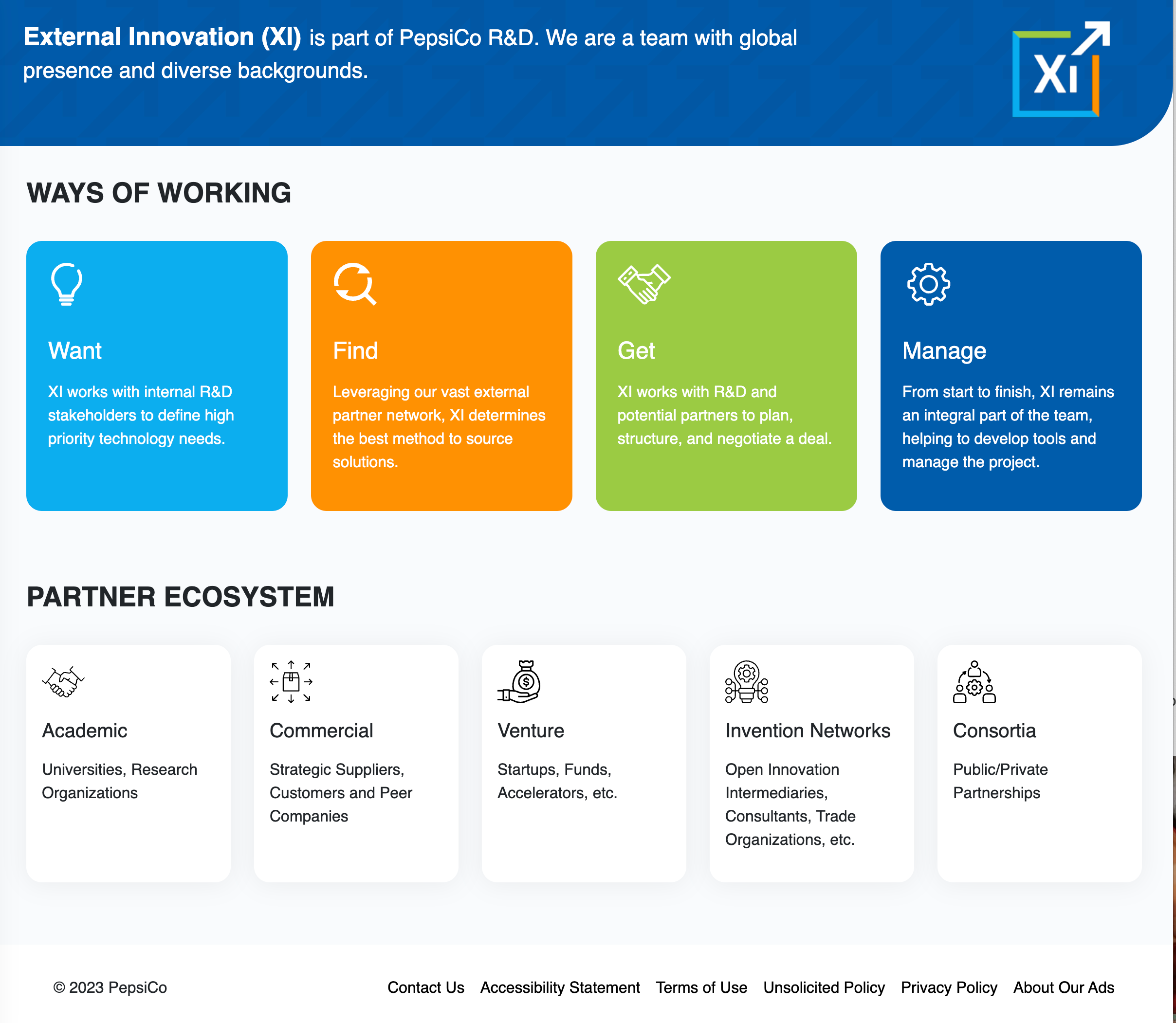
Few companies have demonstrated this better than my former agency team colleague Lauren Brown‘s company Pepsico, with their External Innovation program (XI) and the ways that they couple product and commercial innovation for their Doritos brand by partnering with former sister company, Taco Bell. Both businesses have delivered steady product innovation—new flavors, formats, and menu items—but their real mastery lies in how those innovations are commercialized in hybrid offerings. Limited-time runs, cultural hooks, provocative creative, and disciplined amplification make trial feel exciting and safe at the same time.
Japanese cookie snack Pocky has also been a prolific innovator and turned innovation into a core brand equity attribute.
Where Paid Influencers Play a Critical Role
Today, a growing share of commercial innovation happens through creators and paid influencers—not just as media, but as collaborators.
For product innovation, influencers help translate complexity into lived experience. They show how a feature works, why it matters, and whether it fits into real life. This reduces trial anxiety and accelerates adoption.
But their role in commercial innovation is even more interesting.
Creators are constant experimenters. In the process of testing formats, messages, rituals, and offers with their audiences, they often surface mini-commercial innovation ideas that brands would never identify internally:
A new usage occasion
A reframed benefit hierarchy
A bundle or offer that lowers friction
A narrative that makes value instantly legible
When brands engage creators intentionally—either through scaled paid programs or structured industry expert or consumer panels like those curated and run by experts like my friend Evan Kraut and his company Boardstream—they gain more than reach. They gain a living laboratory for commercial innovation.
These ideas may be small individually, but when validated and scaled, they often become the difference between a product launch and a product franchise.
The Risk of Imbalance—On Either Side
Commercial innovation cannot substitute for real product advancement forever. Brands that lean too heavily on storytelling without solving meaningful unmet needs leave themselves exposed to competitors who let product innovation lead. HOKA is a good example: its rise was grounded in a product experience runners genuinely rewarded, which later translated into brand leadership.
But the reverse is just as risky. Brands that invest disproportionately in product innovation without innovating how those products are brought to market often underperform their potential—despite having something genuinely better.
The Role of Marketing Strategy
This is where marketing strategy earns its seat at the table.
A strong marketing vision doesn’t just communicate innovation—it guides both forms of it. It helps align product, finance, and go-to-market teams around shared outcomes:
Which consumer problems are worth solving
Where the brand has permission to stretch
How much to invest in breakthrough vs. leverage
How to balance product risk with commercial creativity
It also informs innovation within marketing itself—including how creators are used not just to amplify ideas, but to help discover them.
The Real Takeaway
Enduring market leadership isn’t built by choosing between product innovation and commercial innovation.
It’s built by recognizing that:
Product innovation creates value
Commercial innovation unlocks it
Creators help humanize, test, and accelerate both
Marketing strategy keeps them in balance
One of my favorite parts of the CMO job is helping leadership teams to make these disciplines work together. Creating cultures where innovation stops being episodic—and starts becoming systemic. Reach out if you need help tackling this challenge.